Radiation Safety in Nuclear Medicine: What Kind of Protective Equipment Do You Need?

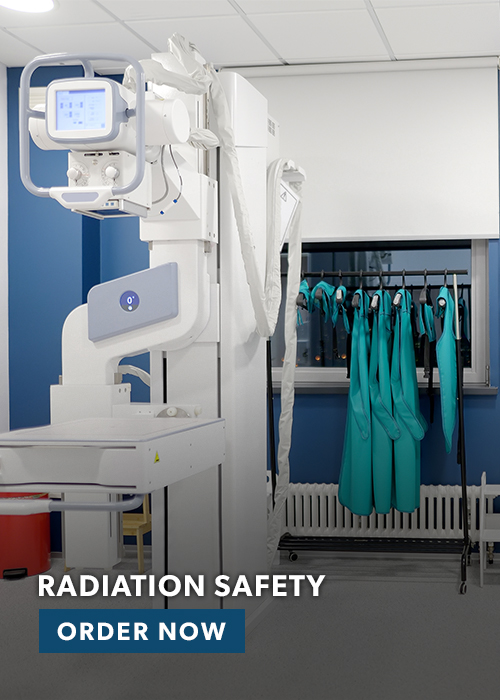
Radiation safety in nuclear medicine is vital if you work in this important field. Whether you’re in the industry for research, diagnoses, or treatments, you can’t become complacent to safely using technology using radiation. While you no doubt take this seriously when working with patients, you also have to think about yourself and those working around you.

In the medical community, nuclear medicine frequently means working with imaging equipment that can emanate dangerous levels of radiation when in close vicinity. At the same time, working in this field means proper disposal and storage of radioactive equipment as well. But does your medical facility have proper tools available to keep everyone fully protected? As your organization ages, your equipment might become too outdated to provide adequate protection for everyone.

This could lead to risky situations, if also eleventh-hour dashes to find quality tools that properly shield radiation. Here at Phillips Safety Products, we’ve designed numerous products with strong guarantees of 100% protection against radioactive materials. Whether it’s to protect your co-workers, use storage units, or finding proper disposal methods, you’ll find various ways to keep yourself compliant with medical regulations.

Let’s look at what’s available and how these products provide the best safety available in the industry.

Finding the Best Protective Shields

Since radiation doses in nuclear medicine once averaged about 440 mrem, protective shields have become continually essential. While that radiation dose above was more prevalent in the 1990s, it’s since gone considerably lower. Even so, being exposed to radiation doses at this level for years could threaten everyone’s health without proper protective gear.

Protection shields come in different shapes and degrees of protection based on the radioactive equipment you use regularly. L-block shields are available through us for medical organizations working with low and high energy gamma-emitting radionuclides.

What’s important with an L-block shield is designing them with custom features since all medical facilities are different in radiation exposure levels. Yet, it’s challenging to find many companies that offer custom features.

Our L-block shields come with custom front shielding, various lead-glass window sizes, and made with stainless steel. With this in mind, we can provide a custom shield that matches your exact specifications.

However, you may simply need an L-block shield that protects your work area. Known as lead caves, these shields are very easy to assemble if you have any doubts. One model comes in just three pieces that easily bolt together in a short amount of time. An alternative model comes with interlocked lead bricks for another simple assembly.

The above products have stainless steel for the most durable products you’ll find anywhere. We’ll custom design these lead caves for you based on your provided measurements.

Dose calibrator shields are additionally available when you need protection while reading radiation levels in an ionization chamber. To accommodate your facility space, we’ll customize these just as easily as the shields above.

Finding Proper Radioactive Disposal Methods

Having to dispose of radioactive materials can become as challenging as finding ways to protect yourself. Not all disposal tools on the market have features that make it easier for those who get rid of dangerous items like radiopharmaceuticals, or even radioactive gloves.

We provide the best disposal products in the way of waste barrels and waste containers. Our shielded waste decay barrels have top-tier construction so you’re guaranteed to eliminate any chance of getting radioactive exposure. Once again, we can design a custom product for you here with the specifications you provide.

If you need a larger-sized barrel than the standard, we’ll accommodate this. The same goes for thickness level on the lead shielding. With the drop-port hole being a vital part of these barrels, you have freedom to choose where you want it on the product. When you have to dispose of bulkier materials, you can request a drop hole that’s suitable in size.

For disposing smaller radioactive items, our shielded waste containers are compact enough where they don’t take up considerable space. They have custom designs once again, though they all come with a unique lid to thoroughly protect employees from inside contents while emptying.

When disposing radioactive syringes, a shielded sharps container is easily customized and has a key-lockable hinged top to prevent contents from accidentally falling out. Strategically placed handles make it easy to lift from one location to another.

Having to dispose of radioactive materials can become as challenging as finding ways to protect yourself. Not all disposal tools on the market have features that make it easier for those who get rid of dangerous items like radiopharmaceuticals, or even radioactive gloves.

We provide the best disposal products in the way of waste barrels and waste containers. Our shielded waste decay barrels have top-tier construction so you’re guaranteed to eliminate any chance of getting radioactive exposure. Once again, we can design a custom product for you here with the specifications you provide.

If you need a larger-sized barrel than the standard, we’ll accommodate this. The same goes for thickness level on the lead shielding. With the drop-port hole being a vital part of these barrels, you have freedom to choose where you want it on the product. When you have to dispose of bulkier materials, you can request a drop hole that’s suitable in size.

For disposing smaller radioactive items, our shielded waste containers are compact enough where they don’t take up considerable space. They have custom designs once again, though they all come with a unique lid to thoroughly protect employees from inside contents while emptying.

When disposing radioactive syringes, a shielded sharps container is easily customized and has a key-lockable hinged top to prevent contents from accidentally falling out. Strategically placed handles make it easy to lift from one location to another.

Finding Proper Storage Products

In environments where radioactive materials are present, ensuring proper storage is crucial for safety and regulatory compliance. Proper storage tools not only prevent accidental exposure to radioactivity but also secure the materials during transportation.

You’ll inevitably have to find proper storage tools in radioactive environments. Without proper storage materials, someone could accidentally access these and get exposed to radioactivity without your knowledge. That’s just as important when transporting radioactive products to various locations.

Keep storage safe with products like our rectangular lead containers. These have a hinged lid that have ample space for padlocks to gain more solid protection. Again, they come with heavy-duty handles so those transporting can gain a good grip during handling.

Consider a lead-lined storage safe for your on-site storage needs. Inside, you have an adjustable shelf to fit any radioactive product you need to keep hidden away. Despite being intended for stationary use, you can still transport it with a pallet jack.

In a case where you’re working in a nuclear pharmacy, you’ll need a shielded generator container. Heavy-duty casters are available on these so you can easily move it to different departments. Plus, when needing to remove the generator, you’ll have access to a lifting hoist for complete safety.

Utilizing appropriate storage products is essential for managing radioactive materials safely. By investing in these reliable storage options, you can ensure the safety of your workplace and the well-being of those handling these hazardous materials.

Contact us here at Phillips Safety Products where you can rely on us for the best nuclear medicine products to assure no radioactive exposure accidents occur.

If you still aren’t sure which nuclear medicine shielding and storage products are right for you, it’s a good idea to give us a call at 1-866-575-1307 or talk to us through our chat or e-mail us at service@phillips-safety.com

Our experts will be able to tell you what you need for your application.

SHOP RADIATION SAFETY PRODUCTS

Benefits of Clip-On Flip-Up Safety Glasses

Safety glasses are essential for various jobs that require eye protection. However, many people find standard safety glasses uncomfortable or inconvenient, especially when they need to frequently take them on and off throughout the day. Additionally, constant switching between wearing and removing safety glasses can weaken the frames, leading to breakage over time. As a result, people in professions such as welding, metal smelting, and glassworking, which involve working with bright light sources and require frequent transitions between bright and normal light, seek more durable and adaptable alternatives. This is where clip-on flip-up safety glasses come in, offering numerous benefits over traditional eyewear.

DISCOVER THE ADVANTAGES OF CLIP-ON FLIP-UP SAFETY GLASSES

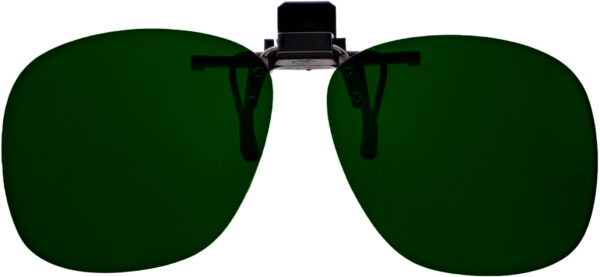
One of the significant advantages of clip-on flip-up safety glasses is that they allow you to wear your regular prescription glasses underneath. Many styles of these glasses are specifically designed to be compatible with standard eyewear, eliminating the need to invest in a separate pair of prescription safety glasses. By attaching the clip-ons to the top of your existing frames, you can easily achieve the required protection from welding light without compromising your vision.

Another notable benefit is the longevity of clip-on flip-up glasses. The constant removal and wear of standard safety glasses throughout the day can cause frames to deteriorate quickly, leading to frustration and the need for frequent replacements. In contrast, clip-on flip-up glasses eliminate this problem as they never have to be fully removed. When it’s time for a break or when you switch to a safe task, you can simply flip them up, keeping your regular glasses on your face and preserving the frame’s condition. The flip-up feature is made possible by hinges designed for easy movement, ensuring the durability of the clip-ons.

Compared to fit over goggles, clip-on flip-up safety glasses offer superior comfort. Some individuals find that fitover goggles can make their eye areas excessively hot and humid due to restricted air circulation. Clip-on flip-up glasses solve this issue by allowing full airflow, thus providing a more comfortable wearing experience. Additionally, clip-on flip-ups are less likely to be lost and do not need to be completely removed when not in use. This not only protects your glasses frames but also ensures convenience and ease of use.

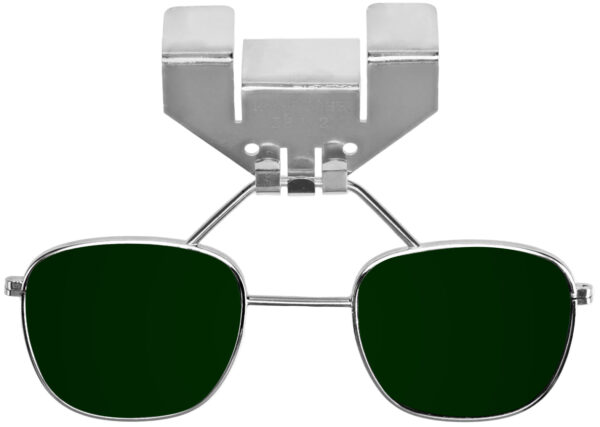
At Phillips Safety, we understand that our customers have diverse needs. That’s why our Clip-on flip-up welding safety glasses are not limited to those who wear regular glasses. We offer frames that can be attached to helmets, hard hats, and bump caps, providing eye protection even for individuals who do not typically wear glasses. These styles are particularly beneficial for people who wear prescription frames, making them a versatile choice for companies seeking to provide protection for everyone without the need for custom solutions.

When it comes to eye protection, Phillips Safety is your trusted partner. Our clip-on flip-up safety glasses offer a combination of comfort, durability, and adaptability, ensuring that you can perform your job safely and effectively. Explore our range of clip-on flip-up glasses for welding, metalworking, glassworking, and other jobs that involve exposure to bright light. Contact us today, and our knowledgeable team will be glad to suggest comfortable and effective solutions tailored to your specific needs.

If you still aren’t sure which clip-on flip-up safety glasses are right for you, it’s a good idea to give us a call at 1-866-575-1307 or talk to us through our chat or e-mail us at service@phillips-safety.com

Our experts will be able to tell you what you need for your application.

SHOP CLIP-ON FLIP-UP SAFETY GLASSES

The Best Safety Glasses to Use with Lasers

From medical personnel and construction workers to pilots and members of the armed forces, lasers have become a critical part of many jobs. While our own eye reflexes protect us from many low-power visible lasers, such as the scanners at the supermarket, for many professionals the high-powered lasers required to perform their jobs pose a real threat to their vision. In fact, it wasn’t too long ago that Johns Hopkins hospital reported an alarming tread of eye injuries due to popular laser gadgets used by children and teens, calling for warning labels on these items.

What exactly happens if a laser hits an unprotected eye? In worst-case scenarios, it can burn the retina or cornea. When light enters the eye, it is focused by the lens on the retina. When the light is too strong or lasts too long, the pigment in the retina absorbs the light, radiating heat. This is essentially what happens when you look at any bright light too long, including the sun. Reflexes cause you to look away, but often you will continue to see a bright spot for a few seconds while the retina is recovering. Unfortunately, laser exposure often leads to the permanent retina or cornea damage. How can you best protect yourself and your employees?

Measuring the Danger of a Laser

The best protection is to prevent the injury. Safety glasses are an affordable and practical precaution. Additionally, they are required by law in some situations. The Occupational Safety and Health Administration (OSHA) classifies lasers, requiring eye protection for classes 3B and 4. What safety glasses are best to use with lasers? Start by understanding four key features of how protection is measured. Assess the risk of your equipment, then compare that with the specifications of safety glasses.

Wavelength

It’s critical to know the wavelength of the laser you are working with because laser wavelength is directly related to the potential damage. Wavelength is measured in nanometers (nm). Lasers have an aiming beam wavelength and an operating beam wavelength. The operating wavelength is the one that poses the threat. Be aware that multiple wavelength lasers may require customized eyewear with multiple layers. The wavelength of the laser is directly related to its potential for harm.

For example, let’s compare laser exposure with the ultraviolet wavelengths from the sun, which measures 315 to 400 nm. Most of the radiation is absorbed by the lens and damage is minimal, often taking years to present in the form of cataracts. Comparatively, near-infrared wavelengths measure 760 to 1400 nm and can cause retinal burns. Far infrared wavelengths, measuring over 1400 nm, can result in corneal burns.

Scattered vs. Direct

The second variable to assess when selecting eyewear is the viewing environment. Greater protection is needed if workers are in a direct viewing situation as opposed to an area of diffused viewing where the radiation from the laser is scattered.

Laser Power

Know the potential power of the laser to which you are exposed. Is it a continuous wave or pulsed system? Continuous-wave systems will be expressed in the form of watts. The energy expended by multi-pulsed systems will be measured in joules, the pulse length in seconds, and the repetition rate in Hertz.

Optical Density (OD)

Optical density refers to the amount of radiation allowed to pass through the lens filter. For example, an OD of 2.0 permits 1/100 of the laser light energy to pass through. Wearing safety glasses with a lower OD than needed can result in an injury.

Assessing Specific Needs

While safety is the priority, there are other factors to consider when selecting protective eyewear. Uncomfortable, ill-fitting, or eyewear that obstructs the wearer’s view can reduce productivity and discourage compliance. When selecting glasses for your staff or yourself, think about the following factors too.

What's the best material?

Consider the best weight, shape, and fit for the job. Many glasses are universal in size but can be adjusted for a custom fit. If you can wear safety glasses with a lower OD, polycarbonate laser glasses are a lightweight, comfortable option. Glass is a better option when higher OD lenses are required but can be costly. Nanospec or thin-film-coated filters are lighter than glass and provide precise protection for specific wavelengths and OD, making them a more comfortable option for higher-risk jobs. Coated lens technology is also a favored choice because it combines both reflective and absorptive properties.

What about visibility?

It’s important for workers to not have their visibility obstructed, for both safety and productivity reasons. You’ll have to balance options like the added protection of solid side shields with reduced visibility. It’s also important to remember that the color of the glasses can reduce visibility. While certain jobs may require a specific color lens, select what is needed. More protection is not always better if visibility is inhibited. Simply put, balance what’s required to perform the task safely. The coated lenses mentioned above are a popular choice because of their superior visibility over glass and polycarbonate.

Do you have custom needs?

Employers must also consider individual needs, in addition to industry standards. Do you have employees that already have glasses and need fitover safety glasses? Do they need safety glasses with bifocal or Photochromic lenses?

Phillips Safety Products has the largest selection of specialized safety eyewear. Whether you need minimal or maximum protection, fitovers, Photochromic lenses, or a bifocal design, we have what you need in stock. Talk to one of our experts about your optic needs. Contact us today.

If you still aren’t sure which laser safety glasses are right for you, it’s a good idea to give us a call at 1-866-575-1307 or talk to us through our chat or e-mail us at service@phillips-safety.com

Our experts will be able to tell you what you need for your application.

SHOP LASER SAFETY GLASSES

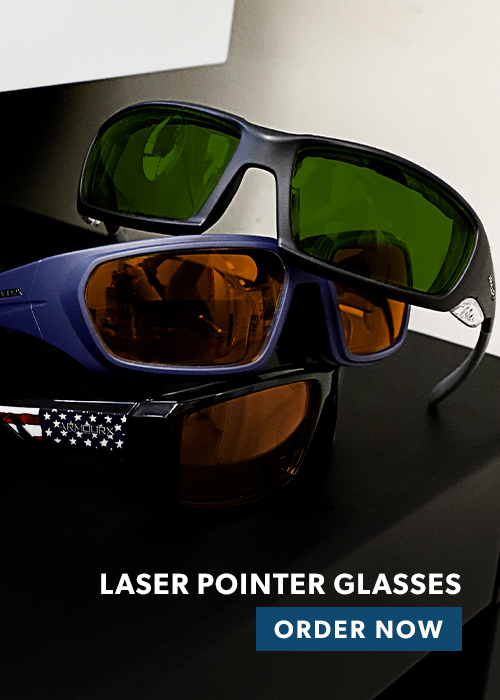
Laser Safety Glasses for Co2 Laser Use: Finding the Right Style and Price

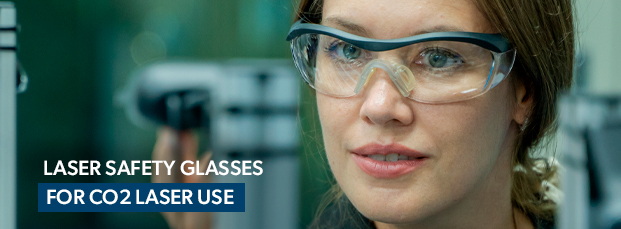
In industries where Co2 lasers are utilized, ensuring the safety of workers’ eyes is paramount due to the potentially harmful invisible radiation emitted. This necessitates the use of specialized eyewear to prevent permanent eye damage. However, it’s crucial to select the appropriate safety glasses designed specifically for Co2 laser use to ensure optimal protection. Failure to do so can result in serious eye injuries.

One key factor to consider when choosing laser safety glasses is the optical density (OD) rating, typically indicated directly on the glasses. For Co2 lasers, it’s recommended to opt for glasses with an OD rating above 5 to provide adequate protection. While lower OD ratings may suffice during laser alignment procedures when the laser is inactive, a higher rating is essential during actual laser operation.

HIGH-QUALITY CO2 LASER SAFETY GLASSES AT PHILLIPS SAFETY

While prioritizing safety is paramount, it’s also essential to consider the comfort and style of the safety glasses. Uncomfortable or outdated-looking glasses can hinder productivity and may discourage workers from wearing them consistently. At Phillips Safety Products, we understand the critical role that laser safety glasses play in protecting workers, which is why we offer a range of high-quality alternatives to meet your Co2 laser safety needs.

The Co2/Excimer filter is specifically engineered to provide protection against the invisible radiation emitted by Co2 lasers. Crafted from white CO2 Polycarbonate, these lenses offer reliable defense against potential eye damage. Regardless of the chosen frame style, the protection level remains consistent, ensuring optimal safety for workers. 

For those seeking a balance of durability and comfort, we recommend the CD2 Laser Safety Glasses 282. Featuring a wrap-around, semi-rimless design and rubberized nose pads, these glasses offer both style and protection.

With a visible light transmission of 85%, Co2 Erbium laser safety glasses are designed to offer exceptional clarity while ensuring ANSI Z87+ and ANSI Z136.1 safety standards compliance. The polycarbonate clear lens filter provides reliable protection against Co2 laser radiation. 

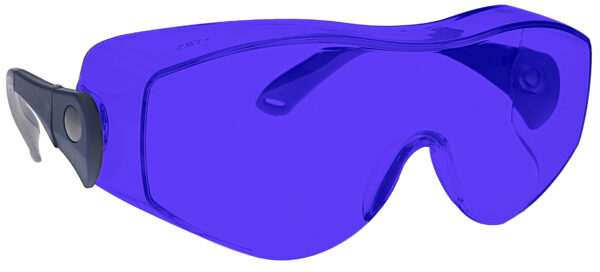
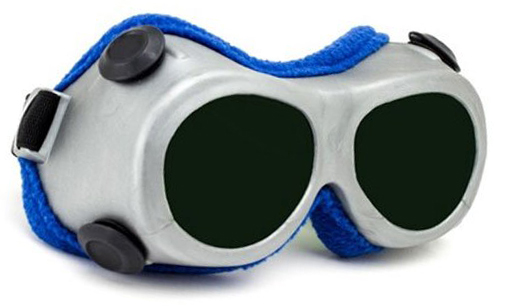
For workers in need of reliable fit-over goggles, we recommend the CR39 Laser Safety Goggles 55. These lightweight goggles, complete with a strap for added security, prioritize both comfort and safety during laser operations.

The AKG-5 Holmium/Yag/Co2 laser safety filter boast a visible light transmission of 75% and comply with ANSI Z87.1 and ANSI Z136.1 safety standards. With CE certified lenses, these glasses offer peace of mind alongside superior protection. 

For a comfortable and secure fit, we recommend the KG5 Laser Safety Glasses 9014. Featuring rubberized nose pads, temple bars, and permanent side shields, these glasses ensure all-day comfort and reliable protection.

The AKG-5 Plus Holmium/Yag/Co2 laser safety glasses offer a visible light transmission of 75% and meet ANSI Z87.1 and ANSI Z136.1 safety standards. With glass clear lens filters, these glasses provide robust protection against laser radiation.

For a stylish yet practical option, we recommend the KG5+ Laser Safety Glasses 66. Featuring adjustable temples and permanent side shields, these glasses offer customizable comfort and enhanced protection.

Featuring a visible light transmission of 75%, the Multiwave AKP, Holmium, Yag, Co2 laser safety glasses adhere to ANSI Z87.1 and ANSI Z136.1 safety standards. The glass light green lens filter ensures reliable protection while allowing for excellent visibility. 

For a sleek and practical choice, we recommend the C1KG5 Laser Safety Glasses 17001. With a durable wrap-around design and rubberized temples, these glasses offer both style and comfort.

Designed with a visible light transmission of 75%, the Multiwave AKP, Diode, Holmium, Yag, Co2 laser safety glasses meet ANSI Z87.1 and ANSI Z136.1 safety standards. Featuring glass light green lens filters, these glasses provide robust protection against laser radiation. 

For a practical yet stylish option, we recommend the  C2KG5 Laser Safety Glasses 1375. With bent temples and integrated side shields, these glasses prioritize comfort and safety during laser operations.

Boasting a visible light transmission of 21%, the Argon, Ruby, Diode, Alexandrite, Yag, and Co2 laser safety glasses comply with ANSI Z87.1 and ANSI Z136.1 safety standards. With glass brown lens filters, these glasses offer reliable protection against laser radiation. 

For a versatile and durable choice, we recommend the DFIU Laser Safety Glasses 300. Featuring adjustable temples and permanent side shields, these glasses ensure customizable comfort and enhanced protection.

The UV, Excimer, AKP, Co2 laser safety glasses feature excellent visible light transmission and adhere to ANSI Z87.1 and ANSI Z136.1 safety standards. Equipped with glass orange lens filters, these glasses provide reliable protection against laser radiation. 

For a comfortable and stylish option, we recommend the W570 Laser Safety Glasses 16001. With adjustable nose pads and a lightweight wrap-around design, these glasses prioritize both comfort and safety.

TRUST PHILLIPS SAFETY PRODUCTS FOR CO2 LASER SAFETY SOLUTIONS

At Phillips Safety Products, we prioritize safety, comfort, and style. Our alternatives offer a range of features and designs to suit every need, ensuring that your workers can perform their tasks with confidence and peace of mind. For more information or assistance in selecting the right laser safety glasses for your workplace, please don’t hesitate to reach out to us. Your safety is our top priority!

If you still aren’t sure which laser safety glasses are right for you, it’s a good idea to give us a call at 1-866-575-1307 or talk to us through our chat or e-mail us at service@phillips-safety.com

Our laser experts will be able to tell you what you need for your application.

SHOP LASER SAFETY GLASSES

Safety Glasses for a Grow Room: High Pressure Sodium to Metal Halide Eyewear

Hydroponic growing is an art form that requires high-intensity lighting to achieve optimal results. Consequently, those working in grow rooms must wear specialized protective eyewear to maintain clear vision. Precision is crucial in assessing crop growth, and specialized lenses ensure clarity and safety.

Grow Room Safety Glasses: Finding the Perfect Match

While many safety glasses are available for grow rooms, finding comfortable and durable options can be challenging. Many available products are neither stylish nor designed to fit various face shapes, often leaving wearers with discomfort and marks on their noses. Additionally, those who wear prescription glasses often struggle to find safety eyewear that fits comfortably over their glasses, leading to frustration and decreased productivity.

Given the long hours hydroponic growing teams often work, it’s essential to prioritize quality eyewear. At Phillips Safety Products, we’ve revolutionized grow room glasses to eliminate washout problems and prevent vision obstruction. Our selection includes high-pressure sodium glasses, LED glasses, and metal halide glasses, all designed to filter excess light and reduce errors.

Specialized Glasses for Different Grow Room Environments

High-Pressure Sodium Glasses

With Hydrospecs HPS glasses, growers get unmatched clarity and protection under high-pressure sodium (HPS) grow lights. Engineered to filter 99.99% of the yellow sodium light spectrum and block harmful UV radiation, these glasses ensure true color fidelity and enable growers to detect potential issues early. Approved for durability and comfort by ANSI Z87.1, Hydrospecs glasses provide a secure fit without compromising protection. Invest in Hydrospecs HPS glasses for unmatched filtration, clarity, and comfort, and cultivate with confidence and precision.

LED Safety Glasses

LED safety glasses are a great addition to indoor growing facilities. Affordable and stylish, these glasses suit various personalities, ensuring your employees look modern and feel comfortable. Crafted with a polycarbonate green lens filter, LED GrowView glasses offer the vital protection required for growers. With a visible light transmission of 23.3%, these glasses ensure optimal clarity and safety in LED grow environments.

Metal Halide Glasses

Metal halide lighting systems are commonly used in hydroponic growing areas and aquariums due to their intense illumination. To protect your eyes from these powerful lights, our metal halide safety glasses are just as essential as our other options. Designed with a polycarbonate green lens filter, Metal Halide GrowView glasses offer essential protection for growers. With a visible light transmission of 23%, these glasses ensure optimal clarity and safety in metal halide grow environments. Our MH eyewear offers the same durable and soft frame design, ensuring comfort and protection.

At Phillips Safety Products, we pride ourselves on being leaders in safety glasses, addressing the needs of industries often overlooked. Hydroponic growing is vital for our economy’s future, and ensuring accurate crop growth requires eyewear that pays attention to subtle details. Contact us to learn more about our grow room glasses and safety eyewear for various industries.

If you still aren’t sure which growers glasses are right for you, it’s a good idea to give us a call at 1-866-575-1307 or talk to us through our chat or e-mail us at service@phillips-safety.com

Our experts will be able to tell you what you need for your application.

SHOP GROWERS GLASSES

Protect Your Eyes with Safety Glasses for Hydroponic Gardening Under HPS Lights

Hydroponic gardening offers a way for growers to optimize their crop yield in a controlled and limited environment. To provide adequate nourishment to the plants, indoor growing requires powerful light sources, such as high-pressure sodium (HPS) lights. While these lights are beneficial for crop quality and productivity, they can be harmful to the eyes of growers. Therefore, using safety glasses is crucial when working with high-pressure sodium lights in hydroponic gardening. 

Before we discuss the main benefits of using safety glasses when using high pressure sodium lights, It is worth mentioning that Phillips Safety, has been around for decades, and are acknowledged experts in the field of producing safety glasses to laser, welding, and glass working industries. We’re a U.S. based company and make our new High Pressure Sodium growview glasses here in the USA.

3 Benefits of Using Safety Glasses When Using High Pressure Sodium Lights

1. Protection against harmful UVC radiation

If you are using high-pressure sodium (HPS) lights for indoor hydroponic gardening, you may not realize that these lights can cause harm to your eyes. Although they are a powerful source of light, they emit UVC radiation that can lead to eye damage, headaches, cataracts, and reduced color perception. The good news is that there are safety glasses designed specifically for hydroponic gardening that can protect your eyes and help you see more clearly.

One of the main benefits of High Pressure Sodium growview glasses is protection from harmful UVC radiation that can be produced by high or low-pressure sodium lights. The ozone layer filters out UVC radiation outdoors, so typical sunglasses are not enough to protect against it. These glasses offer an effective solution for growers who work in an HPS light environment for prolonged periods of time. With proper eye protection, growers can avoid uncomfortable strain on their eyes and maintain good eye health.

2. Better visibility to differentiate plant colors and details

Another benefit of using High Pressure Sodium growview glasses is improved color perception. HPS lights have the effect of making everything look yellowish, which can make it difficult for growers to discern the true color of their plants. GrowView™ glasses allow growers to see their plants clearly and accurately, making it easier to monitor their health. So, being able to see the colors of plants clearly is another benefit of wearing hydroponic gardening safety glasses. 

Phillips Safety’s High Pressure Sodium growview glasses come in many different lightweight, stylish shapes and sizes. Indoor growers subjected to HPS lights for prolonged periods of time, won’t be able to enjoy the beautiful brilliance of their garden plants’ colors with diminished color perception. Part of the joy of hydroponic gardening is enjoying the view, so in addition to the practical uses of safety glasses, is the benefit of simply creating a more desirable environment to work in.

3. Protection against debris

Lastly, the glasses protect growers from debris, fluids, or other substances that may accidentally enter their eyes. While indoor growing environments are generally safe, accidents can happen, and High Pressure Sodium growview glasses provide an added layer of protection to prevent potential damage.

Accidents are not easy to predict, therefore it’s a wise choice to protect one of the most sensitive areas of our body: the eyes. Also, any form of gardening requires growers to be hands-on and generally heads in, which puts the eyes close to the action. 

All of these are good reasons to simply protect your eyes from debris with High Pressure Sodium growview glasses.

Summary

When it comes to hydroponic gardening, the main body part needing protection is the eyes. Harmful UVC radiation is produced by the commonly used high or low-pressure sodium lights, which are the most efficient and powerful source of strong light for plants grown indoors.

By wearing High Pressure Sodium growview glasses, growers will benefit by protecting their eyes from harmful UVC radiation from HPS lights, being able to see their plants’ colors clearly to discern health, and protecting their eyes from any gardening debris. Considering the benefits they offer, these glasses should be standard for any serious hydroponic gardener.

The good news is Phillips Safety is proud to offer the GrowViewâ„¢ line of High Pressure Sodium glasses. Made in the USA with the finest domestic and imported raw materials, these glasses are available in many different lightweight, stylish shapes and sizes. Whether you are a serious hydroponic gardener or a hobbyist, these glasses are a must-have for anyone looking to protect their eyes and improve their growing experience.

We are the experts in light manipulation technology and have now put our expertise to work for the indoor growing industry. There may be other glasses on the market, ours are the best.

If you have any questions about Growviewâ„¢ Glasses, please contact us today. One of our experts will be willing to assist you!

If you still aren’t sure which growview glassess are right for you, it’s a good idea to give us a call at 1-866-575-1307 or talk to us through our chat or e-mail us at service@phillips-safety.com

Our growview experts will be able to tell you what you need for your application.

SHOP HIGH PRESSURE SODIUM GROWVIEW GLASSES

Exploring the Benefits of LED Grow Room Glasses

Controlling light quality, duration, and intensity is crucial for indoor growers to achieve optimal results. In the past, fluorescent lights and heat-producing fixtures were the norm due to the limited availability and cost-effectiveness of LED lights. However, the introduction of affordable and cool-to-the-touch LED panels revolutionized indoor lighting practices. LED panels have now become the preferred choice for indoor growers as they emit less heat and offer precise control over light wavelengths and quantity. This level of control translates into higher quality plants and increased harvest yields.

When growing indoors using hydroponics or other growth mediums, it is essential to provide high levels of full-spectrum light and increased UV light. Some growers resort to using reflective shields and mirrors to increase light quantity, but this often comes at the expense of grower vision. The more light used, the greater the risk of vision wash-out, eye fatigue, and reduced ability to observe crop conditions. In commercial growing industries, prolonged exposure to UV rays can also pose health and safety risks. Discover the benefits of integrating LED growview glasses into your indoor gardening routine and witness improvements in both your vision and your crop’s overall health.

REDUCING EYE FATIGUE

Reducing eye fatigue is a crucial aspect of optimizing your indoor gardening experience. While all plants require full-spectrum light, the red and blue portions of the light spectrum play a vital role in their growth. The Institute of Electrical and Electronics Engineers emphasizes the significance of red wavelengths for plant development and crop quality, particularly in promoting fruiting and flowering. On the other hand, blue light is essential for proper plant development and vegetative growth. LED light panels offer a solution by emitting high-intensity red and blue light, creating a full spectrum that caters to plants’ specific needs. However, it’s important to note that these light emissions, especially blue light, can have an impact on human vision.

Initially, growers were skeptical about the efficacy of LED panels due to the perception that they didn’t produce the same quantity of light as other lighting methods. However, this skepticism proved unfounded. LED bulbs emit high quantities of light, but the majority of these emissions are not visible to the human eye. Our eyes are not adapted to capture red and blue lightwaves, although these wavelengths still affect our vision. In fact, blue light, in particular, emitted from computer screens and LED bulbs, can lead to eye fatigue and even corneal damage. Overexposure to blue light can cause washed-out vision, a problem that often goes unnoticed.

To address these concerns and enhance your indoor gardening experience, LED grow room glasses are designed to reduce glare, eye strain, and the negative effects of blue light. By wearing these glasses, you can improve vision stamina, alleviate eye fatigue, and increase your ability to identify and address any issues with your crop. With reduced eye strain, you’ll be able to focus on the details and intricacies of your plants, enabling you to make informed decisions and provide the necessary care. LED growview glasses play a crucial role in maintaining both the health of your plants and the well-being of your eyes, ensuring an optimal indoor gardening environment.

SHARPER FOCUS FOR HEALTHIER CROPS: KEY DETAILS ENHANCED

Paying close attention to your plants and identifying small issues is an integral part of effective gardening practices. By closely examining your crops, you can detect early signs of problems, improve plant care, and take necessary steps for remediation. The more detailed your observation, the higher the chances of accurately diagnosing plant issues and providing appropriate remedies. LED grow room glasses play a crucial role in enabling you to examine leaves, foliage, and buds with enhanced precision and clarity.

If you observe subtle changes in leaf coloration, such as yellow, red, or orange stippling, it could indicate mineral or vitamin deficiencies in your plants. Similarly, browning along leaf margins or the failure of buds to fruit or open may also point to nutrient deficiencies. With the aid of LED growview glasses, you can closely inspect these symptoms and differentiate them from other potential causes.

For instance, subtle differences in discoloration and patterns of damage, such as ragged edges or higher densities of necrotic tissue in the center of a brown spot, could indicate a fungal infection rather than a deficiency in vitamins or minerals. Mosaic patterns of discoloration are typically associated with viral infections, which can be highly contagious and detrimental to tomato crops if not accurately identified. Additionally, comparing leaves and stems and noting any changes in growth habits or deformities is essential for maintaining a strong and viable crop.

By utilizing LED grow room glasses, you can effectively key in on the details of your plants’ health, accurately diagnose issues, and implement the necessary measures to maintain a thriving crop. These glasses enhance your ability to identify subtle variations and make informed decisions, ensuring the overall health and productivity of your garden or growing operation.

ENHANCING HARVEST EFFICIENCY AND QUALITY

Greenhouse workers and professionals in the horticulture industry are subject to OSHA safety standards to ensure their well-being. One of the potential hazards they face is the exposure to UV rays emitted by LED lights, which can be detrimental to their vision. LED growview glasses provide a valuable solution by offering protection against UV rays. These specialized glasses not only safeguard the workers’ eyes but also help maintain their visual health in environments with high humidity, thanks to features like fog-proof lenses.

During harvest time, precision and attention to detail are paramount. Employees must carefully clip buds to avoid any damage that could jeopardize future harvests. As mentioned before, workers can minimize eye strain and fatigue by wearing LED grow room glasses. This not only benefits the employees themselves but also has a direct impact on the quality of the harvest. By ensuring clear and comfortable vision, the glasses enable workers to perform their tasks with greater accuracy and care, protecting the integrity of the crops and securing the success of future generations of plants.

If you would like to learn more about the ideal LED growview glasses for your eyes and the specific requirements of your grow room environment, we encourage you to get in touch with our dedicated team at Phillips Safety. Our experts will be happy to provide you with detailed information and guidance to help you make the right choice. Contact us today to ensure optimal eye protection and enhance your indoor gardening experience.

If you still aren’t sure which glasses are right for you, it’s a good idea to give us a call at 1-866-575-1307 or talk to us through our chat or e-mail us at service@phillips-safety.com

Our experts will be able to tell you what you need for your application.

SHOP LED GROWVIEW GLASSES

Safety Glasses for High Pressure Sodium Lights are Essential

High pressure sodium lights have made indoor growth of crops possible, but without the proper safety precautions these lights can do serious damage to the human eye. The damage done is often times irreversible so it is imperative that people working in grow rooms take the proper steps to protect their eyes.

Safety glasses are designed specifically for this application. They filter out the light waves that cause harm to the human eye while also helping the wearer see their crops more clearly when they are working so they are not only being protected from dangerous frequencies of light but they are also seeing with more clarity and therefore are able to be more productive. Let’s gain a deeper understanding of the lights themselves and why it is so essential for growers and other grow house workers to protect their eyes from prolonged exposure to high pressure sodium lights.

High Pressure Sodium and Metal Halide Lights

High Pressure Sodium and Metal Halide lights are incredibly strong and have worked wonders for modern growers. They allow growers to get quantity and quality out of their indoor growth harvests. However, the damage these lights do to human eyes is permanent so the proper safety precautions must be observed if you want to keep your eyes healthy.

The sun emits radiation and so do high-powered grow lights. There are three kinds UVA, UVB, and UVC rays. Our atmosphere filters out almost all UVC rays so consumer sun glasses manufacturers do not bother making lenses that filter these rays out. So, if you were thinking you would just grab a pair of your sunglasses and you would also be protected from high sodium lights, you are wrong. You need a specific type of lens.

High pressure sodium lights and other strong grow lights also emit these radiation waves UVA, UVB, and UVC. UVC rays are great for plant growth, but they are terrible for your eyes. Research has shown that prolonged exposure to UVC rays leads to loss of color perception, the development of cataracts, and the inability to see at night-time. All of these conditions are permanent! If you care about your eyes, you need to make sure that you properly protect them while you are working around these high-powered lights.

The good news is that there is a viable solution for protecting your eyes while still being able to work around high pressure sodium and metal halide lights. The solution is safety glasses that are specifically designed to filter out the frequencies that cause serious eye damage.

We are excited to share with you some of the great safety glasses that we make here at Philips Safety. We are industry leaders in occupational safety products and work with a number of clients from Space-X and NASA to MIT and Caltech. Let’s take a look at some of these incredible glasses!

High Pressure Sodium and Metal Halide Lights

High Pressure Sodium and Metal Halide lights are incredibly strong and have worked wonders for modern growers. They allow growers to get quantity and quality out of their indoor growth harvests. However, the damage these lights do to human eyes is permanent so the proper safety precautions must be observed if you want to keep your eyes healthy.

The sun emits radiation and so do high-powered grow lights. There are three kinds UVA, UVB, and UVC rays. Our atmosphere filters out almost all UVC rays so consumer sun glasses manufacturers do not bother making lenses that filter these rays out. So, if you were thinking you would just grab a pair of your sunglasses and you would also be protected from high sodium lights, you are wrong. You need a specific type of lens.

High pressure sodium lights and other strong grow lights also emit these radiation waves UVA, UVB, and UVC. UVC rays are great for plant growth, but they are terrible for your eyes. Research has shown that prolonged exposure to UVC rays leads to loss of color perception, the development of cataracts, and the inability to see at night-time. All of these conditions are permanent! If you care about your eyes, you need to make sure that you properly protect them while you are working around these high-powered lights.

The good news is that there is a viable solution for protecting your eyes while still being able to work around high pressure sodium and metal halide lights. The solution is safety glasses that are specifically designed to filter out the frequencies that cause serious eye damage.

We are excited to share with you some of the great safety glasses that we make here at Philips Safety. We are industry leaders in occupational safety products and work with a number of clients from Space-X and NASA to MIT and Caltech. Let’s take a look at some of these incredible glasses!

Exploring HPS Phillips Safety Glasses

This pair of glasses comes in a comfortable nylon frame. The sleek wrap around design and rubberized nosepads make this lightweight pair of glasses supremely comfortable while providing top-notch protection for the wearer.

1205 is a standard looking pair of safety glasses. Highly durable, lightweight, and comfortable, model 1205 is the industry standard for high pressure sodium light protection.

This is the perfect model for users who also need to wear corrective lenses. This pair comfortably fits over your prescription glasses. They are made out of a lightweight and comfortable rubberized nylon frame that is also extremely durable, which is one of the most important qualities for applications such as this.

This model is where fashion meets durability. 808 has a nylon frame that wraps around your head utilizing rubberized nosepads and temple bars to ensure that your glasses never fall of your face while you are hard at work. These frames are all about functionality, but they look good doing it.

This model is by far one of the most fashionable pair of safety glasses ever made. You’ll not only be protected from dangerous light frequencies but you’ll also look good doing it in a pair of glasses featuring sharp corners and stylish angles. On top of that, this pair also boasts an ANSI Z87 safety rating and comes with a perforated rubberized nosepiece so it doesn’t slip off your face while you are working.

This pair of glasses is designed to fit over any corrective lenses that you may already be wearing. The nylon frame is light and provides supreme comfort, making it an excellent, durable option for a number of applications.

This pair of glasses comes in a comfortable nylon frame. The sleek wrap around design and rubberized nosepads make this lightweight pair of glasses supremely comfortable while providing top-notch protection for the wearer.

1205 is a standard looking pair of safety glasses. Highly durable, lightweight, and comfortable, model 1205 is the industry standard for high pressure sodium light protection.

This is the perfect model for users who also need to wear corrective lenses. This pair comfortably fits over your prescription glasses. They are made out of a lightweight and comfortable rubberized nylon frame that is also extremely durable, which is one of the most important qualities for applications such as this.

This model is where fashion meets durability. 808 has a nylon frame that wraps around your head utilizing rubberized nosepads and temple bars to ensure that your glasses never fall of your face while you are hard at work. These frames are all about functionality, but they look good doing it.

This model is by far one of the most fashionable pair of safety glasses ever made. You’ll not only be protected from dangerous light frequencies but you’ll also look good doing it in a pair of glasses featuring sharp corners and stylish angles. On top of that, this pair also boasts an ANSI Z87 safety rating and comes with a perforated rubberized nosepiece so it doesn’t slip off your face while you are working.

This pair of glasses is designed to fit over any corrective lenses that you may already be wearing. The nylon frame is light and provides supreme comfort, making it an excellent, durable option for a number of applications.

These are just a few of the wonderful glasses that we offer for high pressure sodium lighting applications. At Philips Safety we make a number of other safety glasses for a number of other applications as well! Contact us to learn more about all of our safety glasses and how to keep your eyes safe while working hard!

If you still aren’t sure which growers glasses are right for you, it’s a good idea to give us a call at 1-866-575-1307 or talk to us through our chat or e-mail us at service@phillips-safety.com

Our experts will be able to tell you what you need for your application.

SHOP HIGH PRESSURE SODIUM GROWVIEW GLASSES

Maximizing Protection with Laser Safety Glasses: A Guide to Calculating Optical Density

Laser safety glasses are essential when working with lasers, as they protect your eyes from harmful laser radiation. However, not all laser safety glasses are created equal. The amount of protection provided by a pair of laser safety glasses is determined by its optical density (OD) at specific wavelengths.

To calculate the optical density (OD) required for your laser safety glasses, you will need to know the following information: 

  • the wavelength of the laser 
  • the maximum power output of the laser

CALCULATING OPTICAL DENSITY FOR LASER SAFETY GLASSES

Once you have this information, you can use this following formula to calculate the required optical density: 

Optical Density = Log (Maximum Power Density Output/ Maximum Permissible Exposure).

*Where Maximum power density output and Maximum permissible exposure are both expressed in the same units of joules/cm2 or watts/cm2

*The Maximum Permissible Exposure (MPE) is determined by the American National Standards Institute (ANSI) and is based on the wavelength of the laser. You can find the MPE for your laser by referring to the ANSI Z136.1 (Table 5b ) standard.

Or, an easier method, is to use the Laser Institute of America’s free OD Calculator to determine the required OD. 

*Please note that if you have a pulsed laser, instead of continuous wave, you need to know the energy per pulse, pulse width, pulse repetition for the calculator

Disclaimer: This is for educational purposes only. For a definitive calculation of the OD required by your laser equipment, consult a Certified Laser Safety Officer or professionals at a laser safety glasses company.

MAXIMIZING PROTECTION WITH THE RIGHT LASER SAFETY GLASSES

In conclusion, calculating the optical density of your laser safety glasses is a crucial step in ensuring maximum protection when working with lasers. By following the steps and the formula outlined above, or using the LIA free OD calculator,  you can determine the required optical density for your specific laser application and select the appropriate laser safety glasses to keep your eyes safe.

If you need help in selecting the appropriate laser glasses or goggles for your eye safety requirements, the laser safety specialists at Phillips Safety are available to assist you. Our laser glasses are designed to meet or exceed the ANSI Z136.1 requirements, ensuring that you receive the highest level of protection possible. We offer free consultations and calculations for Optical Density, so you can make an informed decision about which laser safety glasses to choose.

If you still aren’t sure about the optical density for your laser safety glasses, it’s a good idea to give us a call at 1-866-575-1307 or talk to us through our chat or e-mail us at service@phillips-safety.com

Our laser experts will be able to tell you what you need for your application.

SHOP LASER SAFETY GLASSES

Radiation Eye Protection: Which Types Best Fit Your Employees?

Operating a radiology clinic demands meticulous attention to the well-being of your employees, patients, and the technology you utilize. While patient safety is paramount, it’s equally crucial to protect your radiology team from the potential hazards of radiation exposure. Comprehensive protection, including aprons and gloves, is often standard practice. However, neglecting eye protection can put your employees at serious risk for vision problems.

RADIATION EYE PROTECTION: FINDING THE BEST FIT FOR YOUR EMPLOYEES

Exposure to radiation without proper eye protection can lead to severe eyesight issues, such as early-onset cataracts. Visual impairments can be career-ending for radiologists who rely on their vision for accurate diagnostics. Lead glasses are essential for protecting the eyes from radiation damage, a fact that has only become widely recognized in recent decades.

Choosing the Right Protective Eyewear

At Phillips Safety Products, we offer a diverse range of radiation eye protection designed for comfort and style. Here are some options to consider:

Wraparound Eyewear

Wraparound eyewear is popular for its comprehensive coverage and stylish appearance. These glasses not only protect the eyes but also provide a fashionable look that radiologists appreciate. Comfortable and attractive eyewear helps radiologists communicate effectively with patients without distraction.

Fit-Over Glasses

For radiologists who wear prescription glasses, fit-over radiation glasses are essential. Poorly fitting fit-overs can cause discomfort, leading to frequent removal and reduced protection. Our fit-over glasses, such as the RG-33, feature durable nylon materials and distortion-free lenses, ensuring comfort and effectiveness throughout long shifts.

Radiation Goggles

Our goggles and face shields are designed for both comfort and style. With flexible silicone bodies and adjustable elastic straps, they fit easily over prescription glasses, ensuring your employees remain protected and comfortable throughout their workday.

Nike Lead Glasses

We offer a unique line of protective eyewear in collaboration with Nike, seamlessly blending safety and style. Nike’s designs cater to diverse preferences, ensuring your employees find eyewear that perfectly matches their personality and comfort needs.

For a more personalized solution, consider prescription radiation protection glasses. We offer a variety of styles, including wraparounds, metal frames, plastic frames, and goggles, all available with prescription lenses. You can customize these glasses to meet the specific vision needs of your employees, whether they require single vision, lined bifocals, or progressive bifocals.

CONTACT US

At Phillips Safety Products, we are dedicated to providing high-quality protective eyewear for radiology professionals. Explore our extensive inventory to find the perfect fit for your team. Contact us to learn more about our products and how we can help safeguard your employees’ vision.

If you still aren’t sure which radiation glasses are right for you, it’s a good idea to give us a call at 1-866-575-1307 or talk to us through our chat or e-mail us at service@phillips-safety.com

Our experts will be able to tell you what you need for your application.

SHOP RADIATION GLASSES

Radiation Safety Glasses for Interventional Radiology: Finding the Right Eyewear for Imaging Specialists

Interventional radiology is an important field where the radiologist inserts imaging equipment into the body of a patient to scope out disease. It’s a minimally invasive process for the patient, though still potentially risky for the radiologist working with the technology. While you’ve perhaps heard some debate about interventional radiology needing to team up with radiation oncology, both are potentially risky careers if your workers don’t take proper precautions.

Radiation safety glasses for interventional radiology are a must, despite being a slightly different procedure from working with normal radiology equipment. Also known as vascular or surgical radiology, the potential exposure to radiation can cause severe harm to your employees in more ways than one. One of the most harmful aspects is damaging eyesight. Even before interventional radiology became a procedure, many who worked with radiology equipment ruined their vision due to radiation exposure. It wasn’t really known until more recent decades that being around radiation could damage eyes. More specifically, it causes cataracts at a young age, which could quickly end the careers of your radiology team.

Your interventional radiology staff needs complete protection because your patients benefit immensely from the expertise. Applying these technologies directly into the body frequently saves lives, and here’s how proper safety glasses from Phillips Safety Products makes this happen during each procedure.

Glasses for X-ray Fluoroscopy

This common technique in interventional radiology is important to scope out tumors and other illnesses within the body. Because it’s still x-ray equipment, your workers need not only reliable eyewear, but also ones that feel comfortable and look appealing. Considering your team may have to work with a patient up-close for hours, wearing an obstructive pair of safety glasses only leads to distractions. It’s uncomfortable for the radiologist, or it could cause anxiety for the patient.

Natural-looking safety glasses are the answer, including fit-overs when your team wears prescriptive eyewear. Wraparounds are a favorite with many because they provide the utmost protection while frequently looking like real glasses. In addition, they provide real style so your workers can reflect their personalities while working. This includes choosing a personalized color.

When you have to work within a budget, you can acquire economy frames that don’t skimp on being durable and give you superior, distortion-free lenses. The Model 70-PC is a good example of how comfortably normal these glasses look and feel.

Glasses for Ultrasounds

Working with ultrasounds don’t involve quite as much radiation as x-rays, though you should still protect your workers at every level. Some of your workers might try to avoid wearing safety glasses, simply because they can’t find a pair properly fitting over their existing eyewear. Here at Phillips Safety, we provide fit-over styles that work for your entire team of radiologists. At the moment, we offer the RG-33 for easy use and designed for either gender.

The radiation glasses 33 comes in different colors and frame styles, including black, tortoise, or white. It’s designed to fit over any type of glasses your employees wear. Even better, it fits over any head size, something other safety eyewear brands don’t often consider.

Glasses for CT Scans

Otherwise known as computed tomography, these scans can emit dangerous radiation when in proximity, so never allow radiologists around without proper eyewear. Many in your radiology team may want to wear goggles for more thorough protection. The problem with most goggle brands is they simply don’t feel comfortable, especially when having to place them over existing prescription glasses. No doubt you’ve seen few radiation goggles that look very appealing. As such, your workers may refuse to wear them when they’re essential for added protection.

Through us, you can finally find good-looking goggles, as well as fitting over any existing glasses shape. To show you how attractive these goggles are, take a look at the Model RK2 with an elastic headband for a perfectly comfortable fit. At the same time, you get a large lens pocket so you get a maximal viewing area without obstructions.

It’s important to note the lead equivalency with these goggle lenses. The thickness level of the lenses is essential to properly shield them from radiation exposure. The RK2 and our Model 55 have 0.75mm lead equivalency for maximum shielding.

Glasses for MRI's

Magnetic resonance imaging is widely used in radiology and gives little radiation exposure to patients. For your radiologists, it’s a potentially different story in the interventional radiology field. You’ll want to find safety glasses keeping your radiologists comfortable throughout the day since MRI’s can take considerable time, depending on the imaging needed.

Plastic and metal frames are available that help makes safety glasses feel lightweight rather than like a heavyweight on one’s face. Our plastic frames once again come in various styles and colors, including having rubberized soft grip temple bars to make them enjoyable to wear. Metal frames come in aviator style and are just as lightweight. They even come with side shields for added protection features. Along with stainless steel materials, you’ve assured these hold up for years without corrosion.

Glasses for CT Scans

Otherwise known as computed tomography, these scans can emit dangerous radiation when in proximity, so never allow radiologists around without proper eyewear. Many in your radiology team may want to wear goggles for more thorough protection. The problem with most goggle brands is they simply don’t feel comfortable, especially when having to place them over existing prescription glasses. No doubt you’ve seen few radiation goggles that look very appealing. As such, your workers may refuse to wear them when they’re essential for added protection.

Through us, you can finally find good-looking goggles, as well as fitting over any existing glasses shape. To show you how attractive these goggles are, take a look at the Model RK2 with an elastic headband for a perfectly comfortable fit. At the same time, you get a large lens pocket so you get a maximal viewing area without obstructions.

It’s important to note the lead equivalency with these goggle lenses. The thickness level of the lenses is essential to properly shield them from radiation exposure. The RK2 and our Model 55 have 0.75mm lead equivalency for maximum shielding.

Glasses for MRI's

Magnetic resonance imaging is widely used in radiology and gives little radiation exposure to patients. For your radiologists, it’s a potentially different story in the interventional radiology field. You’ll want to find safety glasses keeping your radiologists comfortable throughout the day since MRI’s can take considerable time, depending on the imaging needed.

Plastic and metal frames are available that help makes safety glasses feel lightweight rather than like a heavyweight on one’s face. Our plastic frames once again come in various styles and colors, including having rubberized soft grip temple bars to make them enjoyable to wear. Metal frames come in aviator style and are just as lightweight. They even come with side shields for added protection features. Along with stainless steel materials, you’ve assured these hold up for years without corrosion.

Wearing Prescription Safety Glasses

Radiologists in your facility are far too busy to keep taking their own glasses off to put on safety glasses. While fit-overs work is great, why not have a pair of safety glasses made with prescription lenses? Many of your team may have to work late, and wearing prescription safety eyewear lets them feel like they’re wearing their own glasses all day. They can even go out into the outside world and interact without anyone realizing these are stylish eyewear made to protect from radiation dangers.

prescription-icon

Contact us at Phillips Safety Products to find radiation safety glasses for your valued interventional radiology team.

If you still aren’t sure which radiation glasses are right for you, it’s a good idea to give us a call at 1-866-575-1307 or talk to us through our chat or e-mail us at service@phillips-safety.com

Our experts will be able to tell you what you need for your application.

SHOP RADIATION GLASSES

Radiation Safety Glasses for Interventional Radiology Safety

Interventional radiologists are akin to modern-day heroes facing formidable challenges to save their patients. Unlike mythic battles, however, these medical professionals encounter a persistent, unseen adversary: radiation. While each exposure may seem insignificant, the cumulative effect of low-dose radiation (LDR) poses significant risks over time.

The Necessity of Protective Gear

Medical personnel working with X-rays and other radiation sources typically wear lead aprons, thyroid shields, and leaded gloves. However, one often overlooked area needing protection is the eyes. Long-term exposure to LDR significantly increases the risk of developing cataracts, which can lead to blindness. The International Commission on Radiological Protection (ICRP) recommends an occupational exposure limit to the eyes of 150 mSv/year, but there is debate about whether this threshold is too high.

Cataracts form when the lens of the eye becomes opaque, obstructing vision. Radiation exposure particularly contributes to posterior subcapsular cataracts, where damage accumulates at the back of the lens and progresses to the center. Studies now suggest that there may be no safe threshold for radiation exposure, with the risk of cataracts increasing with each exposure. Notably, 50% of interventional cardiologists develop cataracts, highlighting the importance of eye protection.

The Role of Interventional Radiologists

Interventional radiologists perform numerous procedures that involve radiation, including:

x-ray-icon

X-RAYS

Fluoroscopy-icon_

FLUOROSCOPY

CT-Scan-icon

COMPUTED TOMOGRAPHY (CT) SCANS

fluoroscopy-icon

CT FLUOROSCOPY

MRI-Icons

MAGNETIC RESONANCE IMAGING (MRI)

ultrasound-icon

ULTRASOUND

These imaging techniques are crucial as they minimize the need for invasive surgeries, thereby reducing the risks and recovery times for patients. Procedures such as arterial and hepatic embolization, which emit the most radiation, particularly underscore the need for protective measures.

Effectiveness of Radiation Safety Glasses

Radiation safety glasses work by attenuating harmful rays, significantly reducing the amount that reaches the eyes. Research indicates that leaded glasses can decrease radiation exposure to the eyes by a factor of 7.9 to 10. However, optimal protection requires the wearer to face the radiation source directly, as turning the head can diminish the protective effect.

Despite some practical challenges in achieving maximum effectiveness due to room setups and staff training, leaded glasses still offer substantial protection. The recommendation is clear: whenever lead aprons are required, radiation safety glasses should be worn as well. Glasses with a 0.75mm Pb lead equivalency, like those made from SCHOTT S6HT glass, provide robust protection. While regulations vary, with Europe mandating such glasses for interventional radiology, in the United States, the decision often lies with individual hospitals.

In addition to standard protection, radiation safety glasses can be enhanced with side shields to offer further protection from scatter radiation. This is particularly important in environments where radiation sources can come from multiple angles. Adjusting the fit and ensuring the glasses are worn correctly are crucial steps to maximize the protection provided.

Modern Advances in Radiation Safety Glasses

Historically, leaded radiation glasses were heavy and uncomfortable, leading to poor compliance among medical staff. Recent advancements have produced lighter, more comfortable, and stylish options, increasing the likelihood of consistent use.

New materials and ergonomic designs have significantly improved the wearability of radiation safety glasses. Modern frames are designed to distribute weight more evenly and reduce pressure points, making them suitable for extended wear during long procedures. Some models also incorporate anti-fog and anti-glare coatings, enhancing visibility and comfort.

At Phillips Safety Products, we offer a comprehensive range of safety glasses, including MRI prism glasses and leaded radiation glasses. Our products are designed to meet the protective needs of medical personnel working in interventional radiology. Visit our website today to explore our full line of safety solutions and ensure your eyes are protected.

If you still aren’t sure which safety glasses are right for you, it’s a good idea to give us a call at 1-866-575-1307 or talk to us through our chat or e-mail us at service@phillips-safety.com

Our experts will be able to tell you what you need for your application.

SHOP RADIATION GLASSES

Interventional Radiology vs Radiation Oncology: What You Should Know

In the medical field, two critical disciplines involving radiation stand out: Interventional Radiology (IR) and Radiation Oncology. Both play pivotal roles in diagnosing and treating diseases, albeit with distinct methods and focuses. Here’s a comprehensive comparison of these specialties with up-to-date information.

Understanding Radiology

Radiologists are specialized doctors trained extensively in interpreting diagnostic imaging tests and performing interventional procedures. These procedures utilize technologies like X-rays, ultrasound, MRI, and CT scans to aid in diagnosing and planning treatment across various medical conditions.

After initial radiology training, physicians can specialize further into diagnostic radiology, interventional radiology, or radiation oncology, each addressing specific aspects of patient care from diagnosis to treatment.

Interventional Radiology (IR)

Interventional Radiology employs minimally invasive procedures guided by imaging techniques to diagnose and treat diseases internally. These procedures often replace traditional surgeries, offering patients reduced risks, less pain, and faster recovery times.

Safety Considerations

Radiation Exposure

IR specialists undergo rigorous training in radiation safety protocols to minimize exposure risks for both themselves and their patients.

Protective Measures

Standard practices in IR include using lead aprons, shielding, and radiation monitoring to ensure safety during procedures.

Radiation Oncology

Radiation Oncology focuses on using high-energy radiation to target and destroy cancer cells while minimizing damage to surrounding healthy tissue. This specialty provides curative or palliative treatments depending on the cancer type and stage.

Safety Considerations

Patient Safety

Radiation Oncologists prioritize precise treatment planning and delivery to ensure radiation targets only tumor sites, minimizing side effects on healthy tissues.

Advanced Technologies

Innovations in radiation therapy machines, such as linear accelerators and proton therapy systems, continue to improve treatment outcomes and patient comfort.

In both Interventional Radiology and Radiation Oncology, safety protocols are crucial. These include meticulous treatment planning, adherence to radiation safety guidelines, and the use of advanced protective equipment to minimize risks associated with radiation exposure.

Recommended Products for Radiation Protection

For healthcare professionals in Interventional Radiology and Radiation Oncology, using high-quality radiation safety products is essential. These include:

Proper radiation eyewear shields eyes from scattered radiation.

Essential for shielding against radiation during procedures.

Used to create safe working environments, such as radiation booths or walls.

Provides additional shielding against radiation exposure.

These products not only protect healthcare providers but also contribute to maintaining a safe environment for patients undergoing radiation treatments. For those involved in either field, whether as healthcare providers or patients, understanding these specialties’ nuances is crucial for making informed decisions about treatment options and ensuring a safe and effective healthcare environment.

To learn more about radiation safety products and how they support healthcare professionals in delivering optimal care, please contact us. We are committed to providing innovative solutions that enhance safety and improve patient outcomes.

If you still aren’t sure which radiation safety products are right for you, it’s a good idea to give us a call at 1-866-575-1307 or talk to us through our chat or e-mail us at service@phillips-safety.com

Our experts will be able to tell you what you need for your application.

SHOP SHOP RADIATION SAFETY PRODUCTS

Ensuring Safe Laser Operations: Understanding Class 4 Laser Safety Requirements for Laser Workers

Laser technology has revolutionized many industrial and scientific processes, but it also poses potential hazards to workers if proper safety measures are not implemented. Different lasers pose varied levels of danger, so they are classified according to the potential hazards of laser beams.

This classification system is based on their output power and wavelength. There are four main classes and the higher the class, the more powerful the laser is. That means that Class 4 lasers, which have the highest power output, pose the greatest risk of injury. As such, they require stringent safety requirements to ensure the well-being of laser workers.

SHINING A LIGHT ON LASER BEAMS

Generated by stimulating radiation emissions, laser beams differ from ordinary light because they’re spatially and temporally coherent. While their spatial coherence keeps the laser beam narrow even over long distances, their temporal coherence keeps the beam in a narrow spectrum.

Laser beams vary by the amount of energy they contain, and this determines what the laser can accomplish. It is important to highlight that lasers of moderate and high intensities damage the eyes and skin, but they are not the only ones. Even low-powered lasers, such as those teachers and speakers use as pointers, are dangerous under certain circumstances.

NAVIGATING THE RISKS OF LASER BEAMS

Laser beams are primarily dangerous because of the heat they generate. This is what burns skin and retinas, and it can also cause flammable materials to catch fire. Besides, some specific wavelengths cause photochemical effects.

For most people who work with lasers, their eyes are most at risk. Because they are so coherent, laser beams narrow to an extremely small spot on the retina, destroying photoreceptor cells. If the light is powerful enough, it causes permanent damage almost immediately, creating a permanent blind spot in the retina.

Beams of infrared lasers are not visible to the human eye, and therefore do not cause eyes to blink. The beam can generate a temperature above the boiling point of water, and since they do not cause eyes to blink, an infrared laser beam can enter the pupil of someone’s eye and burn their retina without their knowledge. It is important to know that it is not immediately painful, but the person may hear a click or pop.

GUIDING YOUR WAY THROUGH CLASS 4 LASER BEAM SAFETY PRECAUTIONS

Lasers require the use of certain safety precautions and equipment, as determined by the American National Standards Institute (ANSI) Z136. For more details about the hazards and regulations about using lasers, you can check Occupational Safety and Health Administration (OSHA)’s informational page on the topic, as well as FDA’s article about Laser Products and Instruments.

To protect workers, scientists, and medical patients from laser damage, the government regulates their use. In the United States, they are regulated through the 21 Code of Federal Regulations (CFR) Part 1040, while in the EU it is the IEC 60825 standard.

One of the key requirements for working with Class 4 lasers is the use of appropriate personal protective equipment (PPE), such as laser safety glasses or goggles. These PPE must be specifically designed for the wavelength and power of the laser being used, and must be worn at all times when working with the laser.

Another crucial safety measure is the implementation of a comprehensive laser safety program. This program should include hazard evaluations, standard operating procedures, and worker training on safe laser use and handling. Additionally, all laser equipment and facilities should be regularly inspected and maintained to ensure proper functioning.

SHIELDING YOUR WORKSPACE: LASER CURTAINS, BARRIERS, AND WINDOWS

Laser curtains and barriers are another effective way to prevent and manage laser beams, safeguarding workers against the hazards of reflected exposure to Class 4 lasers. In particular, curtains are a suitable option for medical and laboratory settings. Regarding laser barriers, at Phillips Safety they are sewn with double or triple-reinforced seams to guarantee the protection. Plus, they are available in various sizes and must comply with fire-retardant standards.

When it comes to laser windows and domes, they are typically made of glass or acrylic sheets that are 3 millimeters thick. However, similar to laser glasses, the windows only obstruct specific ranges of laser wavelengths, and it is essential to ensure that their optical density (OD) is sufficient.

Other safety considerations for Class 4 lasers include controlling access to the laser area, and implementing emergency procedures in the event of an accident or injury. Following these safety requirements and guidelines is essential to minimize the risks associated with working with Class 4 lasers and to ensure a safe and productive working environment for laser workers.

To protect workers, scientists, and medical patients from laser damage, the government regulates their use. In the United States, they are regulated through the 21 Code of Federal Regulations (CFR) Part 1040, while in the EU it is the IEC 60825 standard.

One of the key requirements for working with Class 4 lasers is the use of appropriate personal protective equipment (PPE), such as laser safety glasses or goggles. These PPE must be specifically designed for the wavelength and power of the laser being used, and must be worn at all times when working with the laser.

Another crucial safety measure is the implementation of a comprehensive laser safety program. This program should include hazard evaluations, standard operating procedures, and worker training on safe laser use and handling. Additionally, all laser equipment and facilities should be regularly inspected and maintained to ensure proper functioning.

If you still aren’t sure which laser safety glasses are right for you, it’s a good idea to give us a call at 1-866-575-1307 or talk to us through our chat or e-mail us at service@phillips-safety.com

Our laser experts will be able to tell you what you need for your application.

SHOP LASER SAFETY GLASSES

How to Protect Your Eyes From Lasers for Your Safety

Lasers are more dangerous than most people understand, and your eyes are the most vulnerable to laser damage. Too many people, accustomed to seeing lasers used as pointers, in movies and to put on exciting shows, don’t understand the danger. Used properly, lasers are useful for many applications, but everyone should learn how to protect their eyes, even from low power laser beams. People who work with powerful lasers in scientific laboratories, medical institutions, or industry need to fully understand the risk and how to protect themselves.

What is Laser Light?

It’s a beam of radiation that, unlike normal light, spreads all around, is coherent. It all goes in one direction. Also, it consists of the same electromagnetic wavelength or color. And the radiation’s duration, its pulse, is uniform. A set amount of energy creates the beam, and this varies a lot. That’s why teachers or business presenters can safely use simple laser points, but some laser beams are powerful to incinerate materials, starting fires. The more intense the laser beam is the more damage it causes, and the more precautions people need to take to protect their eyes.

How Lasers Damage Eyes

All laser light beams carry energy and heat. And the more concentrated and powerful the beam of light, the more heat it transmits. They are also more dangerous the shorter the pulse’s duration.

* Small, highly focused beams of light go right through your cornea and lens, which focuses the light even more, so it hits a tiny spot on your retina, destroying photoreceptor cells. This causes a temporary or permanent blind spot before you can blink.

* Powerful lasers in the visible to near-infrared spectrum (400 to 1400 nanometers) heat your entire retina.

* Your cornea absorbs laser beams with a wavelength of under 300 nanometers and beams in the high infrared range, which can inflame them, called photokeratitis, or more seriously burn them.

* Your eye’s lens absorbs laser beams with a wavelength of under 400 nanometers, which increases the risk of cataracts. That clouds your lens, blocking your vision.

* A wider laser beam can cause momentary flash blindness just like any other extremely bright light when it shines directly into your eyes before your blinking reflex can work.

* The human eye cannot see infrared laser light. Therefore, such a beam can damage your eye without even triggering your blinking reflex.

* Some lasers are so powerful they damage your eyes even though after something has diffused the beams. Even in that weakened state, they cause damage. Some laser beams, typically closer to blue or ultra-violet on the spectrum, cause damaging photochemical reactions in the tissue of your eyes.

Lasers are Classified According to Their Danger

The American National Standards Institute issued its Z136 standards classifying lasers according to the risk they pose, and the Occupational Safety and Health Administration uses them. However, everyone should understand how to protect their eyes.

Take Precautions With All Lasers

Laser pointers are Class 1, which are generally safe. However, the classification assumes everybody uses the product as designed. Laser pointers as properly used pose no danger. However, there is a case on record of an 11-year-old girl who temporarily damaged her eyes by staring directly at a pointer’s beam. Therefore, people should treat every laser with respect. Even with laser pointers, don’t stare at the beam or the dot.

Light Show Safety

In the United States, the Food and Drug Administration and some state agencies regulate the use of laser light shows. Those require beams with high power and therefore do pose some risk. Entertainment venues use beamstops to terminate the beams before they can cause any damage.The most common way of avoiding risk to the audience is to shine the beams over the heads of the audience, thus avoiding the eyes of the audience. This is the usual practice in the United States. In some countries, producers scan the laser beams at the audience but must do so fast enough to keep their exposure in a safe zone.

Airplane and Motor Vehicle Safety

It’s now against the law to shine a laser light on an airplane or motor vehicle. You could cause flash blindness in the pilot or driver, making them lose control and crash.

Laser Protection in the Workplace

* Understand the risk. Don’t become complacent.

* Everybody should know where an infrared laser beam goes.

* In a laboratory, only use an optical table. Make sure all laser beams go only horizontally. Stop all the beams at the edge of the table. People should never place their faces or eyes at the same level as the laser beam because reflected beams could leave the table.

* Leave watches, rings, and all other jewelry outside the laboratory. Everything inside it should have a matte finish to reduce specular reflections.

* Reduce power when adjusting and aligning beams.

* Use an interlock to automatically shut the laser down when needed. The most dangerous lasers, Class 3B and Class 4, normally come with an interlock system. That means they immediately shut down under dangerous circumstances. For example, if the laboratory door opens.

* Have a Certified Laser Safety Officer on duty.

* Restrict access to lasers while in use only to trained and authorized personnel.

Class 3R, 3B, and 4 Lasers Require Goggles and Glasses for Safety

These are the most dangerous types of laser, and they are mainly used in laboratories, industry, hospitals, and the military. Everyone working with them should wear the proper protective eyewear.

These act as filters to absorb the laser light, greatly reducing its intensity. The manufacturers make them of glass and polycarbonate to filter specific wavelength ranges. You make certain your glasses have the correct wavelength, or they cannot filter the laser beam.

The other important aspect of laser safety glasses is Optical Density. This is basically how strong the glasses are. The stronger your laser beam, the higher OD it requires to keep your eyes safe. However, the beam’s energy is not the only variable that affects OD. The pulse’s duration affects the beam’s danger, so it also affects the OD, or whether the light is continuous instead of pulsed.

Again, you must make certain you wear the proper glasses. Manufacturers post their wavelength and OD in the frames. Your Certified Laser Safety Officer knows the requirements for the laser you are using.

Laser Safety Windows

These windows are filters for particular laser wavelengths and OD just like the glasses and goggles. They are acrylic or glass and come 3 millimeters thick. Just like the glasses and goggles, you must make certain your window is appropriate to filter the light beam of your laser.

Barriers

Like other light, laser light beams end when something absorbs its energy, blocking it. Have your CLSO design and set up the workspace to eliminate the laser beam after it has performed its function. These barriers come as curtains or mobile stands. Whether you play or work with lasers, always respect them, and be careful to protect your eyes.

At Phillips Safety Products we want everyone to protect their eyes from lasers. We make the safety laser glasses and goggles, windows, and barriers your workplace needs to protect the eyes and vision of your employees. Contact us today.

If you still aren’t sure which laser safety glasses are right for you, it’s a good idea to give us a call at 1-866-575-1307 or talk to us through our chat or e-mail us at service@phillips-safety.com

Our experts will be able to tell you what you need for your application.

SHOP LASER SAFETY GLASSES

Laser Eye Protection Requirements for Worker Safety

The Occupational Health and Safety Administration (OSHA) sets stringent requirements for workers who use lasers as part of their jobs, whether in industry, scientific laboratories, or medical institutions. These requirements are detailed extensively in OSHA’s technical manual. While lasers pose various health and safety threats to workers, their beams are most hazardous to the eyes.

LASER BEAMS TRANSMIT HEAT ENERGY, ENDANGERING EYES

Laser beams consist of highly collimated light, meaning they are concentrated into a narrow beam. This concentration significantly raises the temperature in the eye, denaturing the protein in the eye’s tissue and resulting in burns. Laser light can be orders of magnitude more damaging than ordinary light due to its focused nature, sometimes even more harmful than direct sunlight.

Though lasers can also burn the skin, the eyes are more vulnerable. Lasers vary in wavelength, ranging from ultraviolet to infrared. The human eye can only see the visible spectrum, making infrared lasers especially dangerous as they are invisible to the naked eye. This invisibility can lead to complacency among workers, who might forget or ignore the laser beam’s path, inadvertently exposing themselves. Infrared beams, being invisible, do not trigger the eye’s blink reflex, allowing the beam to pass through the cornea, lens, and pupil to reach the retina, causing severe burns and potential blind spots.

OTHER EYE DAMAGE FROM LASER BEAMS

Near-ultraviolet and visible spectrum laser beams can damage the cornea and conjunctiva, causing photokeratitis, a painful condition similar to sunburn of the cornea. This condition is common among welders who do not use proper protective goggles.

The lens can absorb some ultraviolet and infrared wavelengths, increasing the risk of cataracts, a condition where the lens clouds over, impairing vision. While cataracts are typically caused by aging or prolonged sun exposure, laser exposure can induce them at a younger age.

LEGAL LASER CLASSIFICATIONS

Federal law (21 CFR Part 1000) mandates that laser manufacturers label their products with the appropriate classification, certifying they meet the Federal Laser Product Performance Standard (FLPPS). These standards classify lasers based on their Accessible Emission Limits (AEL), which consider the maximum permissible exposure and the area of the limiting aperture (typically the eye’s pupil).

The power and pulse duration of a laser are crucial factors in its potential to cause harm. More powerful lasers transmit more heat, increasing the risk of eye damage. Lasers that pulse frequently pose a greater risk than those with less frequent pulses or continuous beams. Class 3A, 3B, and 4 lasers are the most dangerous, with Class 4 being the most powerful.

OPTICAL DENSITY (OD)

Optical Density (OD) measures the strength of the glasses in blocking laser light. The higher the OD, the more protection the glasses provide. It’s essential to wear glasses or goggles with an OD sufficient for the laser you’re using. The strength of the laser and the duration or frequency of its pulses directly impact the required OD.

OSHA’s manual includes a table of Optical Densities, and the Laser Institute of America offers an online OD calculator. However, it’s best to rely on professional advice rather than self-calculation. Manufacturers stamp the OD on the frames of laser safety glasses and goggles, so ensure your safety lenses meet the necessary standards.

CONCLUSION

At Phillips Safety Products, we offer a range of goggles, glasses, and windows designed to meet laser eye protection requirements. Our experts can help determine the appropriate optical density for your specific laser. We also provide barriers to guard against laser beams. Contact us today to learn more about our solutions for laser eye protection.

If you still aren’t sure which laser glasses are right for you, it’s a good idea to give us a call at 1-866-575-1307 or talk to us through our chat or e-mail us at service@phillips-safety.com

Our experts will be able to tell you what you need for your application.

SHOP LASER SAFETY GLASSES

Military Laser Safety Glasses for Pilots and Infantry.

The United States military is actively advancing its arsenal with a diverse array of laser weapons, as detailed in a Popular Mechanics article. However, these powerful lasers present hazards not just to adversaries but also to the military personnel who operate them. During the operation and training phases, service members are at risk of exposure to these lasers, underscoring the critical need for military laser safety glasses to protect their eyesight. Furthermore, the proliferation of compact yet potent lasers among civilians, often used carelessly, poses additional risks, particularly to pilots.

LASERS ENDANGER BOTH MILITARY AND CIVILIAN PILOTS AND AIRCRAFT

A lot of people enjoy playing around with laser pointers. Some of them are just ignorant and don’t understand the danger involved. Some think it’s fun to point at airplanes and helicopters. Either they don’t realize or don’t care, the laser beam does not stop high in the atmosphere as it seems to. It keeps on going, high enough to reach the cockpits of aircraft. Recently, a laser beam blinded the eyes of Air Force pilots, landing a C-17 at Ramstein Air Base, Germany. Fortunately, the plane reached the ground safely. In March 2016, a laser beam distracted and disoriented flight crew members of an F-15E Strike Eagle as it descended toward RAF Lakenheath in England. In the United States, a 2012 law makes shining a laser at an airplane or helicopter a federal crime punishable by up to five years in prison.

This is why at Phillips Safety, we developed Laser Strike Eyewear for military and civilian pilots to protect their eyes from these dangers, even though various state laws also prohibit this. The government has convicted and jailed people for it but hasn’t stopped them. The problem is growing around the world, not only in the United States and Europe, causing governments in all areas to criminalize pointing lasers at aircraft. New South Wales, Australia, completely banned the lasers. Because the laser beam points back to its source on the ground as well as in the air, they are easy for police in helicopters to locate. So far, the perpetrators are laser hobbyists ignorant of the dangers of pointing a beam at an airplane. However, many of them are not caught. Are terrorists behind any of the laser strikes? Nobody knows for certain, so nobody can rule out the possibility.

THE DANGERS

People fire off lasers at night. It’s also nighttime for airplane pilots, so the cockpit is dark except for the lights of the instrument panel. Therefore, their pupils are open, up to 4 millimeters wide, increasing their vulnerability to sudden glares and flashes. It’s the same effect as what your eyes feel when they’ve been in the dark for a long time, but a dazzling bright light suddenly glares into them. That ruins their night vision. Even if the beam does not hit the cockpit, the pilot sees it in flashes, and so it distracts the pilot. Worse, that must arouse their suspicions someone hostile is targeting them.

Although laser light beams are extremely coherent and focused, unlike ordinary light, they do spread out as it travels. Therefore, a point that creates just a narrow dot at a close distance is inches wide when it reaches the cockpit. When it hits the windscreen or bubble of a helicopter, imperfections in that material spread the light out further, up to a meter, causing such a glare the pilot cannot avoid it. Such flashes might last only a thousandth of a second. When the light’s strong enough, the laser beam causes flashblindness and afterimages. This pamphlet from the Federal Aviation Authority goes into more detail about the danger. The FAA reports that 7,500 laser strikes on aircraft occurred in 2015. They estimate there’ll be 12,000 in 2016.

This article in the British Journal of Ophthalmology points out that the small, red pointers of 1 or less milliwatts of the past did not cause a significant threat to eyes unless someone stared into them for a long time. These are properly categorized as Class 2. However, stores and websites around the world now sell much stronger laser devices, both red and green, with power up to 6000 Mw, usually treated as Class 3B or Class 4, too dangerous to use without proper safeguards.

The most dangerous parts of any airplane flight are takeoff and landing. Most airplane crashes happen then. And that’s when lasers pose the most risk to the pilots and aircraft because that’s when pilots are using their eyes to get off or on the landing strip. Laser beam flashes are also a particular concern during emergency maneuvers. Planes are most at risk while under 10,000 feet.

THE MOST DANGEROUS TIMES

MILITARY AND CIVILIAN PILOTS CAN PROTECT THEMSELVES

You can buy and wear Laser Strike eyewear. They come in lightweight designs you can wear underneath headsets and helmets. The fitover model suits those wearing prescription lenses. Made of polycarbonate, the lenses absorb the energy of laser beams, drastically reducing their intensity, but because designed for aviation use, they will not distort your view of your instrument panel. They come in 3 models:

Block green laser beams (532 nanometers)

Visible Light Transmittance 46.9%

Block green and blue laser light beams

Visible Light Transmittance 43%

Block green, blue, and red light

Visible Light Transmittance 23.3%

The most common laser strikes (91%) are of green light. That’s because the human eye perceives green as the brightest form of laser light, and that also makes it the most dangerous. VLT measures how much visible light goes through the lenses. Therefore the lower the percentage of VLT, the more light the lenses block.  Pilots around the world wear these glasses to protect themselves, especially during takeoff and landing when they are below 10,000 feet. In many countries, wearing them at those periods is standard operating procedure.

ADDITIONAL SAFETY MEASURES

The FAA marks fixed laser facilities that always use lasers, such as astronomical observatories, on aeronautical charts. Temporary laser users, such as producers of outdoor laser light shows show up during pre-flight information as a NOTAM or Notice to Airmen.

THE MILITARY IS DEVELOPING LASER WEAPONS

That means they must take the same measures to protect their personnel that industries and laboratories using dangerous Class 3B and Class 4 lasers in civilian life must employ.

At Phillips Safety Products we make laser safety strike glasses for both commercial and military pilots. Contact us today to learn how you can protect your eyes from either thrill seekers or terrorists.

If you still aren’t sure which laser safety glasses are right for you, it’s a good idea to give us a call at 1-866-575-1307 or talk to us through our chat or e-mail us at service@phillips-safety.com

Our experts will be able to tell you what you need for your application.

SHOP LASER POINTER SAFETY GLASSES

Safe and Spectacular: High-Quality Solar Eclipse Glasses for an Amazing View

Eclipses are truly remarkable natural phenomena that offer an enriching experience for everyone. Lunar eclipses are easily observable, as they do not demand any special eye protection. However, the spectacle of solar eclipses is even more awe-inspiring, provided you have the appropriate eye wear. If you wish to immerse yourself in the stunning beauty and grandeur of a solar eclipse, consider investing in high-quality solar eclipse glasses. These will enable you to safely enjoy the breathtaking event while preserving your vision.

WHAT IS A SOLAR ECLIPSE?

A solar eclipse takes place when the moon comes between the sun and the earth, resulting in the creation of a shadow that gives rise to the iconic image associated with this phenomenon. During the eclipse, the sun appears as a mere outline, which is a sight many people readily recognize. Moreover, a solar eclipse produces various types of shadows on the earth, each having its own unique and discernible effects.

In the realm of solar eclipses, three distinct shadows come into play. First and foremost, we have the Umbra, the innermost and darkest region of the moon’s shadow. When the Umbra falls upon the Earth’s surface, it completely obscures the sunlight. The Penumbra, on the other hand, represents the next shadow, extending beyond the Umbra. In this zone, only a portion of the sun’s light gets blocked, making it the lighter of the two shadows. Lastly, we encounter the Antumbra, located outside the Umbra. This fascinating shadow creates the iconic ring of sunlight encircling the moon during the eclipse. These three shadows contribute to the diverse and captivating visual effects observed during this celestial event.

Beyond the intriguing array of shadows, solar eclipses exhibit a diverse range of types, each presenting its own distinct characteristics. The total eclipse takes place when the moon completely obscures the sun, and the observer finds themselves directly beneath the moon’s umbra and penumbra. In contrast, a partial eclipse occurs when the moon only partially covers the sun, casting down its penumbral shadow. An annular eclipse unfolds when the moon’s disc aligns centrally with the sun’s disc, resulting in the antumbral shadow being cast upon the Earth. Lastly, the rare hybrid eclipse occurs when an annular eclipse transitions into a total eclipse. Each type of solar eclipse offers a captivating and unique experience for those fortunate enough to witness them.

According to NASA, North America is in for its next solar eclipse on April 8, 2024. To ensure a remarkable experience, it’s advisable to initiate early preparations and conduct research on the prime locations where the event will manifest with the utmost intensity. Planning ahead will enable you to make the most of this extraordinary celestial occurrence and secure a memorable viewing experience.

WHY DO YOU NEED SPECIAL GLASSES?

As we’ve all been reminded by our parents at some point, it’s crucial never to gaze directly at the sun. Such an action can result in lasting eye damage, as one might imagine. While some may assume that a solar eclipse offers protection from this harm since you aren’t technically looking directly at the sun, this is a misconception. The truth is that even during a solar eclipse, special eye protection remains essential to safeguard your eyes from potential harm. Ensuring you have the appropriate eye wear is of utmost importance during this celestial event.

During a solar eclipse, the moon casts a shadow over the Earth, but it is incapable of blocking all the sun’s emitted rays. Under normal circumstances, when attempting to look at the sun, most people naturally squint their eyes or avert their gaze to avoid direct exposure. However, during a solar eclipse, there’s a stronger temptation to look directly at the obscured sun without instinctively protecting our eyes. Nevertheless, even in this diminished state, sunlight continues to emit ultraviolet rays that can lead to various eye problems, including macular degeneration, solar retinitis, and corneal dystrophies. It remains imperative to exercise caution and utilize proper eye protection to safeguard against these potential hazards during this celestial event.

In essence, gazing at the sun during a solar eclipse without adequate protection poses a serious risk to your eyes, potentially leading to blindness. Despite the shadow cast during the eclipse, any residual sunlight, no matter how small, carries with it harmful ultraviolet rays, infrared light, and intense brightness. It’s essential to understand that your retina lacks pain receptors, so you won’t immediately sense any injury to your eyes. Unfortunately, by the time you become aware of the damage, harm may have already occurred. Safeguarding your eyes with proper protection is crucial during a solar eclipse to prevent such detrimental consequences.

WHAT ARE SOLAR ECLIPSE GLASSES?

Undoubtedly, witnessing the natural marvel of a solar eclipse is an experience not to be missed. However, ensuring your safety while enjoying this celestial phenomenon necessitates the use of appropriate eye protection. Regular sunglasses may appear adequate, but they lack the necessary strength to shield your eyes adequately. Instead, opt for specialized solar eclipse glasses or number 14 welder’s glasses, specifically designed for this purpose. These glasses effectively safeguard your eyes by limiting the amount of light that passes through. Just as welders shield their eyes from the intense glow while working with fire and molten metals, you also need to protect your eyes during a solar eclipse with the right eyewear.

When looking for solar eclipse glasses, it is essential to secure a pair explicitly crafted for this purpose. The use of incorrect glasses not only leads to wasteful expenditure but can also pose a risk to your eyes without immediate awareness. To guarantee the appropriate eyewear, be sure to select certified glasses at Phillips Safety, ensuring they are designed precisely for viewing solar eclipses.

By opting for high-quality solar eclipse glasses, you can have complete peace of mind, knowing that your eyes will be shielded from the sun’s harmful rays. With this protective eyewear, you can fully immerse yourself in the mesmerizing experience of a solar eclipse. For further information on utilizing the right eyewear, feel free to reach out to us.

If you still aren’t sure which solar eclipse glasses are right for you, it’s a good idea to give us a call at 1-866-575-1307 or talk to us through our chat or e-mail us at service@phillips-safety.com

Our experts will be able to tell you what you need for your application.

SHOP SOLAR ECLIPSE GLASSES

High quality glasses for viewing a solar eclipse

Few celestial events capture our collective wonder like a solar eclipse. It’s a rare dance between the sun, moon, and Earth, creating a celestial spectacle that leaves observers in awe. As we gear up for the next cosmic performance, it’s crucial to be eclipse-ready with a focus on eye safety. In this guide, we’ll explore solar eclipses, the importance of proper eye protection, and how Phillips Safety’s solar eclipse glasses can enhance your viewing experience.

THE PHENOMENON OF SOLAR ECLIPSES

Total solar eclipses are awe-inspiring, each offering its own unique marvels. During the peak, which lasts several breathtaking minutes, viewers are treated to an unfiltered view of the sun, revealing its structure and dynamics without the overwhelming glare. Witnessing a total solar eclipse is a transformative experience, offering a profound new perspective on our place in the universe. Even a partial eclipse vividly demonstrates the mechanics of our solar system, allowing observers to witness the moon’s silhouette against the sun with proper eye protection.

ENSURING SAFE VIEWING

It’s crucial to use proper eye protection throughout any solar event, except during the brief totality phase when the sun’s light is minimal. Viewing options include certified solar eclipse glasses, which provide essential protection against harmful solar radiation. NASA recommends lenses with at least a #14 welder’s glass equivalency or darker. Ordinary sunglasses or welder’s goggles do not offer sufficient protection and should not be used.

SOLAR VIEWING FILTERS

High-quality solar eclipse glasses feature specialized filters, typically incorporating a thin layer of chromium alloy or aluminum on the lenses. These filters block more than 99.99% of harmful UV and IR rays, along with 99.99% of visible light, ensuring safe observation of solar phenomena like sunspots. Look for glasses marked with the CE certification and manufactured under ISO standards for reliability and safety.

PROTECTING YOUR VISION

Direct exposure to solar radiation can cause serious eye damage, including “eclipse blindness” or retinal burns, which may not manifest immediately but can lead to lasting vision impairment. Properly certified solar viewing glasses are essential to safeguard eyesight during solar events, ensuring a safe and memorable experience for all observers.

CHOOSING THE RIGHT GLASSES

Optical glass lenses, rather than plastic, are recommended for their durability and longevity of filtration properties. Unlike plastic, which may degrade over time, glass lenses maintain their protective qualities. Handling and storage conditions can affect plastic glasses’ usability, underscoring the importance of choosing high-quality, reliable eyewear.

For more information on high-quality solar viewing glasses and safe viewing practices, contact us at Phillips Optical, leveraging over a century of expertise in optical glass and filters.

If you still aren’t sure which solar eclipse glasses are right for you, it’s a good idea to give us a call at 1-866-575-1307 or talk to us through our chat or e-mail us at service@phillips-safety.com

Our experts will be able to tell you what you need for your application.

SHOP SOLAR ECLIPSE GLASSES

Where to Buy Solar Eclipse Glasses

As the anticipation builds for the next solar eclipse, ensuring you have the right equipment is crucial for a safe and unforgettable experience. Solar eclipse glasses are not just a convenience; they’re a necessity to protect your eyes from harmful solar radiation. With so many options available online and in stores, finding reliable glasses can be overwhelming. To help you make an informed decision, we’ve compiled a guide on where to buy solar eclipse glasses, focusing on Phillips Safety, a trusted provider in eye protection.

WHERE TO PURCHASE HIGH QUALITY SOLAR ECLIPSE GLASSES

Phillips Safety has built a reputation for excellence in manufacturing high-quality optical products, including solar eclipse glasses. Here’s why they stand out:

  • Certified Safety Standards: Phillips Safety’s eclipse glasses meet international safety standards, ensuring they provide adequate protection against harmful solar rays. When you purchase from Phillips Safety, you can rest assured that your eyes are well-protected during solar events.

  • Reliability and Durability: Their glasses are designed for durability and comfort. Made from high-quality materials, they offer clear visibility of the eclipse while filtering out harmful ultraviolet (UV) and infrared (IR) radiation. This ensures a safe viewing experience without compromising on visual clarity.

  • Expertise and Experience: With decades of experience in optical products, Phillips Safety understands the importance of precise optics and reliable eye protection. Their expertise ensures that each pair of eclipse glasses provides optimal safety and performance.

TIPS FOR BUYING SOLAR ECLIPSE GLASSES

When purchasing solar eclipse glasses, it’s crucial to prioritize safety and quality. Start by ensuring that the glasses are certified to meet the ISO 12312-2 international safety standard for direct solar viewing. Opt for trusted sources like the manufacturer’s official website or reputable retailers known for selling certified eclipse glasses. Reading customer reviews can provide valuable insights into comfort, durability, and effectiveness. Avoid suspiciously low prices or unknown sellers, as counterfeit glasses may not offer adequate protection against harmful solar radiation, potentially endangering your eyesight.

By following these guidelines and choosing Phillips Safety eclipse glasses, you can enjoy the upcoming solar eclipse safely and with peace of mind. For more information or to purchase your pair of eclipse glasses, visit Phillips Safety’s official website today.

CONCLUSION

Investing in high-quality solar eclipse glasses is essential to safeguarding your vision during celestial events. Phillips Safety offers reliable protection with their certified eclipse glasses, ensuring both safety and clarity for your viewing experience. Visit their website today to explore their range of products and prepare for the next solar eclipse in style and safety.

If you still aren’t sure which solar eclipse glasses are right for you, it’s a good idea to give us a call at 1-866-575-1307 or talk to us through our chat or e-mail us at service@phillips-safety.com

Our experts will be able to tell you what you need for your application.

SHOP SOLAR ECLIPSE GLASSES

Become a Distributor

Volume Discount